Further info and resources from my website

Monday, June 25, 2012

FOR SALE: Software firm HR Access going on the block

PARIS
You will not see the following ad in the Financial Times or Wall Street Journal, or any IT trade publication, but you might as well. After almost 10 years trying to shape HR Access into an outfit to serve its changing purposes, investment firm Fidelity is throwing in the towel. The software company it bought in 2003 from IBM is up for sale.

I discussed in an April 2010 post ("Is Fidelity Still in the HR Services Business?") some of the recurring problems faced by HR Access and I predicted that Fidelity would sell off the company. Two years on the problems haven't been solved and Fidelity is now actively looking for a buyer to divest itself of what has turned into a failed venture. Its dream of ever recovering the staggering amounts it has plowed into the French company are unlikely to ever materialize.


So, who is the likely buyer?

- Payroll outsourcing giant ADP could be interested (rumor has it that it did express some interest.) It has experience buying European payroll providers: as recently as 2010 it bought Logica's payroll business in the Netherlands and Italy's payroll leader, Byte. HR Access will help it expand its market share in countries where it is already a leader. But being a leader in the markets where HR Access is strong may not constitute a big incentive for them, unless the price is particularly attractive.

- SAP is also a leader in France and Italy, but less so in the payroll business. And since PeopleSoft is still strong in France, the acquisition could strengthen its hand. The fact that both SAP and HR Access have one of the largest employers in Europe as a customer (the French government - SAP for HR and HR Access for Payroll), this could be a good opportunity to consolidate both into one single project and offering. And as a European company, the cultural fit may be closer than ADP (or Fidelity for that matter.)

- Meta4 could do well with HR Access's customer base especially since they operate in the same geographies. However, Meta4 (whose business has been as stagnant as HR Access) is going through a bad patch now, so any merger would be a case of the broke leading the broke. Or Sopra, one of the top French IT services company with a well-known HR product, Pléiades.

- One cannot rule out Oracle, the serial acquirer if there ever was one. But with Oracle's focus on the cloud/SaaS business, HR Access may be too small to feature on its radar. 

- What about the various private-equity firms that have invested hundreds of millions of dollars recently acquiring HR companies? Maybe legendary KKR, owner of fellow European Northgate Arinso, could see the opportunity to increase its  market share in key European countries. Sure, that means adding  one more product (and many versions of it, to boot) but NGA's portfolio is already so large that managing a couple of additional products should not change much.


Hopefully HRA 9 is better localized than their season's greetings
(as seen on  their website on Jan. 3, 2013)
- Anybody else?

Whoever makes the move better have a good strategy in place AND ensure execution follows through, otherwise it will be yet another case in the software industry of throwing good investment money after bad.  


Thursday, May 10, 2012

Good riddance, Sarkozy!

"La France forte" or "Strong France"
was Sarkozy's campaign slogan.
NEW YORK CITY
In one of the most memorable lines of his presidency, Nicolas Sarkozy threw at a French citizen who dared refuse to shake his hand, "Get lost, asshole!" ("Casse-toi, pauvre con!" in the original French- Watch the YouTube video) At this week's second round of the presidential election, the French people returned the compliment sending Sarko packing.

Two years ago, in a blog called "Sarkozy: La France c'est moi" I alerted my countrymen to the dangers of the presidency of the authoritarian and egomaniac bullshitter who tricked us into trusting him with the nation's top job. It took five years but finally the French people saw through him and gave him what Churchill once called, when he was on the receiving end of it, "the order of the boot." And rightly so.

This is of course, only Part 1 of the Sarkozy defenestration. Part 2 should be to prosecute him for the various abuses in power (some of which I mentioned in the same blog) and convict him. Hopefully this time we'll have a convicted French president who will serve his sentence, unlike Chirac (see my blog, "Real crime, fake justice") Then we could say that we have made a qualitative jump on the democratic scale by ensuring that justice is meted out to ALL citizens regardless of social status. We would thus show the way to other Western countries to send Blair, Bush & Co to jail for the crimes they have committed and for which they enjoy a scandalous full impunity.

I have seen press reports about how François Hollande "won" the election. That is simply untrue. Sarkozy lost it. Just look at the figures, less than 2% separated each candidate from victory, hardly the mark of a landslide. And yet, considering Sarkozy's disastrous record and abysmal approval ratings, Hollande should have won by a handsome 60% at least. But are we surprised at the poor showing by the Socialist candidate?

Not really. After all, he was not the first candidate for his party's nomination; that was Dominique Strauss-Kahn who was disqualified after that little incident at the Sofitel hotel in this city last year. Hollande was not even the second choice, that was party chief Martine Aubry who dithered so long about running that she finally lost to him. Many Socialist Party activists even toyed with the idea of letting Hollande's former partner, Ségolène Royal, have a second try at the presidency, but thank God they thought better of it at the last moment (I used to think that  the US with George W. Bush and Sarah Palin had a monopoly on idiots running for the presidency, but obviously in France we also have our share.) Unlike Barack Obama who fought tooth and nail to get the job (what he did with it is another issue and will be the subject of a blog come November), François Hollande was just lucky to be the least bad man at the right place at the right moment.


"Sarkozy, Outgoing President!"


So François Hollande won by default. Will he be up to the task? Will he finally solve the crippling debt crisis we have been suffering from for the past several years now? Well, considering that in his thirty years as a party apparatchik, lowly MP or local politician in a sleepy rural town he never displayed any conviction, vision or signed any remarkable policies, that would be quite a miracle. A couple of months ago, I caught him campaigning on a bright Sunday morning in a market close to my Paris home, at the Bastille. Since the debt crisis is the direct result of banking misbehavior, I put the question to him:

"Monsieur Hollande, are you going to nationalize the banks?"

"At any rate, we will reform them," he replied.

"Is that a promise?" I asked grabbing his arm. With Bertrand Delanoë, the mayor of Paris smiling that phoney smile of his just behind him, the then-candidate-now-president nodded his head reiterating that policy decision before leaning forward to kiss a kid and shake hands with well-wishers.

In case you don't believe me, here are the videos I made (they are of course in French, I appear at the end of the first video, and in the second you can hear my voice asking the question at 00:40 followed by Hollande's answer.)


So Hollande is on record promising bank reform and to get us out of the debt mess these banks brought us in. After the wasted twelve years with Chirac and five Sarkozy years, it would be great to finally have a president who can deliver.

Unfortunately, considering his record, my advice to you is not to hold your breath. We are used in France (and other Western pseudo-democracies) to being betrayed by our political class. As we say, Plus ça change...


Thursday, April 26, 2012

The 10 Commandments for selecting a new software: Best practice guidelines

If Moses were  a software consultant,
he would probably have the
following tips on his tablets
RIO DE JANEIRO
From the moment corporate IT decided to eschew home-made systems for package software  two decades ago (in the most advanced economies, that is), user organizations have been using different methods to select the best software that matches their needs. My methodology was honed by a 15-year experience which started with Paris-based CXP (briefly part of Giga analyst group), an analyst-cum-consulting firm which was born out of the desire of large French companies to have a vendor-neutral outfit that could provide them with unbiased advice on the booming corporate software industry.

Since then I have been able to see what works, what does not, what tasks in the selection process can be improved. Surprisingly enough, most companies tend to make similar mistakes regardless of size, industry or geography. I am currently helping a client in Brazil navigate the shoals of finding a talent management tool and I am confronting issues similar to ones seen in Europe and the United States.

This post is a description of  what best practice I have witnessed and currently use as part of my software-selection methodology. I have summarized my findings in what I call, a tad pretentiously,  my Ten Commandments of  a software-selection system.

1. Thou shalt link your project to your company's business objectives

The first thing I ask a client when they tell me they are looking for a new HR system is, "What are your company's business objectives?" And I am still amazed to hear the answer, even from an HR leader, to the effect that they have no clue. My first piece of advice is that if you don't know what your company's business objectives are (increase market share? be recognized as the best in your industry? reduce costs? etc.) you better get acquainted with them ASAP. Sometimes I have to brace myself for the realization that the situation is even worse than I thought: the company has yet to determine what its objectives are. I have become known for harassing my clients until they manage to get from senior management clarity on this aspect, otherwise there is little point in the whole exercize. Only then can we move on and start linking the automation of a performance appraisal system or a new payroll to those overall goals. Yes, even payroll. I know that few companies, if any, have ever gained market share or attracted new customers with a brandnew payroll product, but assuming that your previous system managed to pay your employees accurately and in a timely fashion, if you have decided to replace it there should be more drivers than just, "Our vendor has gone under."  In one short sentence, show how this new HR project (regardless of scope) can contribute to the bottom line.


2. Thou shalt shirk away from a lengthy RFP

I am not a lazy person and do not charge my clients by the number of pages an RFP contains. So if I strongly advise against spending time to produce an RFP the size of a door-stopper it is for a good reason. In the goold old days when companies moved from home-made systems to standard software, it made sense to list every single feature needed, to compare which vendor would require the least amount of (expensive) customization. But now that the package-software market has reached functional maturity and that a new breed of vendors, web-based and with no possibility to customize, has emerged, spending an inordinate amount of time on listing every single requirement one can think of does not make sense any more. It is far more efficient to have fewer requirements, but well-chosen ones, which would allow you to differentiate between vendors since, at the end of the day, that is the point of the whole exercize: to select one vendor over others.

It is worth remembering that just because a requirement is crucial it does not mean it has to feature in your RFP. If you are looking at replacing your HR system of record,  there is little doubt that the ability to track employees is key, and yet you don't need to mention that in your RFP since by definition all HR systems worth their salt would have that feature which is now largely commoditized. So, since it will not help you differentiate between various offerings, don't waste your time on it. Similarly, some nice-to-have features which no vendor offers (say, expatriate management in a global HCM system) are not going to help you: since no vendor is likely to offer the feature, it will not help you differntiate between the vendors.


3. Thou shalt pay particular attention to integration points

A summary of my previous point (or commandment) is to focus on what really matters, such as a data model/architecture to reflect the 21st century and not the previous one, or integration points. We are in an industry that moves very fast, and we can be certain of few things about it except that one of the major issues I have been confronted with since I started out two decades ago will probably be around when I retire: integrating the different pieces of your HR system to make it deliver the value you expect. It is therefore key that you identify the different integration point between Payroll<->HR Admin <-> Time Management and of course between your overall HR system and other corporate applications.

Be aware that integration issues can arise not only when duct-taping systems from different vendors but even with products from a single vendor: either because it was the result of various acquisitions or because of lousy design.


4. Thou shalt consult ALL stakeholders

Long gone are the days when the IT department would buy, install, run an application and spring it on HR users unawares. Nowadays, it is more likely that HR will be the in the driver's seat of selecting an HR system, although in less advanced parts of the world it still is not the case. IT still has to be consulted if only to make sure that the system used does fit within the company's overall technology structure. If your company is an SAP shop, you will have to make the case very strongly that your HR-specific requirements need a PeopleSoft or Workday. But there are two types of stakeholders that need to be taken care of.

One are line managers and by extension other casual users. At the turn of the millennium it was enough to make sure that the system provided manager (or employee) self-service transactions and everybody was happy. Now, there is an increasing realization that HR tools are no longer the province of HR but of the whole organization. A successful recruiting drive brings on board not only HR specialists and recruiters but the recruiting (line) manager, other  colleagues-to-be, the applicants, maybe a manager + 1. In other words, HR has become too important to be left to HR only, and by way of consequence so have HR tools become: tools for everybody in the company.

Second, and even more important for global companies, is the need to also take into account the requirements of all types of users in different countries where you have subsidiaries. I still see many global projects where only a token interest is taken in the non-HQ workforce. Many global US-based companies suffer from this attitude, still believing that "If it's good for US it must be good for them." Thankfully, the belief that to be global means to be American everywhere is on the wane and when I take an international assignment I always make a point to visit the most important foreign operations  and meet face-to-face with a variety of users there. Where it is not practical because of time or budget reasons, I set up conference calls. The fact that I speak fluently five global languages is a tremendous help since HR is largely a "glocal" business and many HR users are monolingual: speaking, literally and metaphorically, their language can make or break the deal, so to speak. But regardless of your linguistic abilities, the point is that if you do not take into account all your constituents' needs, the system ends up being used only by a few and rejected by a majority. And for me that is the definition of failure. Not going over budget and beyond schedule. If anything, I'd rather have a system that costs more and took longer than initially planned but which most users like and enjoy using rather than one delivered on time, within budget and which everybody hates. I still see too much of that.


5. Thou shalt work with a vendor shortlist -not longlist

15 years ago when I started advising companies on what was the best HR system for them I would send out that lengthy RFP (decried in §2) to a good half a dozen vendors, often even up to eight, and spend quite some time analyzing the responses before selecting a short list of three. I still see too many companies doing that. And yet it is now a waste of time. If you have devised your RFP smartly, rather than comprehensively, a knowledgeable observer would easily know which top vendors are more likely to meet your needs. If your underlying technology is IBM (DB2) then Oracle EBS does not make sense. If you have unique customization needs and are paranoid about security and data confidentiality, then going true SaaS (such as with Workday) may be a non-starter.

One of the points of a compact, concise and precise RFP (as defined earlier) is that by allowing you to focus on differentiators you can go straight to the production of the shortlist of vendors who will receive your RFI/RFP. The time, resources and energy thus saved can be better employed doing your homework or due diligence.


6. Thou shalt do thy due diligence thoroughly

By due diligence I mean several activities that will allow you to get under the hood of the product and understand the culture of the vendor. Since you are likely to be doing business together for at least half a decade (the life expectancy of an HR system has come down from 7 years to less than 5 now) you better make sure you understand one another. Selecting a vendor is to a large extent akin to entering into a marriage with all its attendant ups and downs.

- Have meaningful, representative use cases to be used in scripted demos. Be particularly careful with on-premise systems which can doctored (customized). I know many companies that are still licking their wounds, the result of too credulous a belief that everything they saw during a demo was standard (or vanilla as we call it in our jargon) functionality when it actually involved hundreds of man-days of consulting work.

- I find it very useful to keep some "trump cards": a use case or a question that are sprung on the vendor during the demo to get an idea on how unexpected requirements (which always happen) can be taken care of, especially if you are planning to go with a web-based SaaS vendor where you don't have the liberty to customize your way out of a particularly complex but crucial need.

- "It's the references, stupid!": a relevant customer using the same system you are considering can provide you with more insight than pages of responses to an RFP and days of demoing. Again, you will place the cursor differently whether you are looking at SaaS or on-premise vendors, since with SaaS customers, everybody will be describing the same beast, whereas an on-premise customer may well be on a different release from the one you are considering and some of the points they are making will therefore not be relevant to you. Also, don't focus exclusively on product aspects but also on service quality, customer-centricity, how good the vendor is (or is not) at including your enhancement requests in future releases. Here again, older, on-premise systems will have to be gauged differently from newer, web-based SaaS products.


7. Thou shalt avoid falling prey to fads

Although the corporate software market, and its HR segment, is made up of literally hundreds of vendors, we are still quite a gregarious bunch, often adopting tools because others have. In the late '90s when I was still with CXP, a client of mine was the French savings bank network Caisses d'épargne (actually one member of the grouping.) I helped them select an HR system and they wanted PeopleSoft even though they didn't have the budget for it. And when I pointed out that another product would do the job just as well, I remember the whine: "But every HR director has PeopleSoft!" Sounded like a kid wanting the same toy as his buddy next door.

Things have not changed that much. Last week, an HR leader told me they were about to select Workday but he couldn't give me an objective reason for that. Actually, remembering point #1, he couldn't even link that decision to a business reason, or even what HR features he wanted, apart from some high-level HR functions. But he wanted Workday because he had heard it was a good system.

Grievous error. As I always tell my client, "there is NOT such a thing as a good product or a bad product." All products and vendors have their pros and cons, you have to match them to your technical, functional, corporate and strategic circumstances and decide which one will be the lowest risk. Workday is undoubtedly the most remarkable corporate and HR tool to have emerged in a long time. And yet it is not the cure-all. In many cases it is not the best tool, it could even be counter-productive to use it. So, Mr./Madam User, please do yourself a favor and refrain from being a software fashionista.


8. Thou shalt have a sponsor

Whenever I get involved in an HR project,  especially at the initial system-selection stage, I always insist on having a "sponsor" or "champion." This is not the key contact that is a liaison between the company and the outside world, but a senior manager (either the Head of HR or the CEO, but preferably a C-level executive) who, when the time comes, will bang heads together to make things happen. Barring such a role, the chances of such a project succeeding will be limited.

The sad state of things is that often such  a person is either not identified or if they are they keep a low-profile apart from attending a launch party or steering-committee meetings. They are often afraid of becoming the fall guy, taking the brunt of criticism should the project not deliver the goods, not realizing that by such an attitude they turn that possibility into a self-fulfilling prophecy.


9. Thou shalt negotiate carefully

"If we only knew" is the perennial cry of the client when things go wrong and they realize that thy have limited recourse options. If you are adopting an on-premise system, where you are basically in charge of everything, make sure that any roadmap promises are not something you overheard at a user conference but a contractual commitment that is part and parcel of the contract. Otherwise, apart from withholding  maintenance fees, you do not have much leverage with your vendor. If you are a SaaS customer, you are in a different situation: at least you didn't pay a hefty license fee upfront to get started, so the revenue your vendor gets from you is the monthly susbcription fee which you can withhold. Because in this model the vendor owns both the software and your data be even more careful before signing the SLA contract, especially if the vendor insists that their template is the only one available and are reluctant to modify it to accommodate your needs.

I am not saying you should base your relationship entirely on legal terms, but make sure that should litigation be unavoidable, you have some good cards to play.


10. Thou shalt hope for the best and plan for the worst

Having a Plan B is always a good idea, whatever endeavor you are in. If you have decided to use a SaaS-based system, make sure that you are covered in terms of disruption to the service, that you have in place a disaster-recovery strategy (in conjunction/addition to what the vendor already offers.) If you are planning on changing your payroll system, don't discontinue the previous one until the new one is up and running to your entire satisfaction, not merely selected. This means way beyond the few months' parallel payroll exercize.


Of course, success cannot be guaranteed until the system has been implemented (and a future blog will address what I am likely to call my 10 Commandments for a successful implementation.) But many seeds for a successful implementation are planted at the earlier, system-selection stage, and as such this stage is crucial. Skip it or skimp on it at your own peril! 

Friday, February 24, 2012

Meryl Streep, or how to be the world's greatest actress for three decades - and counting

In her latest movie, la Streep
plays Mrs. T. to a T
PARIS
One can be certain of few things in this world - only death and taxes, Mark Twain famously said. I'll add a third one: next Sunday, at this year's Academy Awards, Meryl Streep will walk away with the Best Actress statuette, and an egregious injustice will finally have been redressed. The Film Academy (see my  post about last year's awards edition) is famous for snubbing great acting and rewarding mediocre talent (isn't that an oxymoron?) Streep is "America's most admired actress" said Vogue, which I would dispute. America's? You mean the world's!!! but probably that the famous magazine as is the wont of many US companies cannot distinguish between the two. And yet the last time Streep won an Oscar was 30 years ago. Since then she has been regularly nominated, more than any other actor in  history, and as regularly ignored.

But next Sunday amazing Meryl will finally clutch her third Oscar for her tour-de-force performance as the famous British Prime Minister, Margaret Thatcher in The Iron Lady, which I watched last week. I grew up with both ladies, had seen Thatcher in innumerable speeches and interviews, learned to admire her (when she became the Western world's first elected leader -  well, almost, I think tiny Iceland got there first) and revile her (as a student in Scotland in the mid-1980's during the famous miners' strike I saw first-hand how much hatred she elicited.) After ten minutes watching the movie, I sat mesmerized. Meryl Streep had completely disappeared. I was watching Thatcher, her voice, her tone, her pitch, her gestures, the face slightly bent, the teeth, the glowing eye. As a film buff who pride myself in having seen most movies worth watching in the art's 100+-year history, I have to say that this is simply one of the greatest performances ever put on screen.

The movie itself is of slight interest as it basically consists of sketches from Thatcher's life: we see Margaret get married, have kids, become a politician, win the election, flirt with declining popularity, win the Falkands war, get a historic third mandate, fall out with her party colleagues who ditch her. The only originality (well, even then, it isn't that original) is that it tells the story through flashbacks between the present where the old lady is losing her mind and the past. The movie doesn't bring anything new about the nature of British politics or how a woman managed to be such a winner in a man's world (or why she'd want to be in the first place). Whereas The Queen was brilliant in how it depicted the essence of political power in Britain (especially between the monarch, prime minister and the media-manipulated citizens), The Iron Lady is quite shallow. But then The Queen was made by one of Britain's greatest directors, Stephen Frears, whereas (and here's another prediction I'll make) The Iron Lady's Phyllida Lloyd will never reach directorial stratosphere. But who cares? Watching this average movie is the price to pay when it comes with such a dazzling performance.

Interestingly enough, Meryl Streep's most celebrated performances came as "dual" roles. In The Iron Lady, she plays Thatcher at the height of her career and in her old age, although with good makeup and clever shots, I think she could also have played her at a younger age (remember how a 50ish Bette Davis played herself as a teenager in Whatever Happened to Baby Jane?) In Sophie's Choice, in 1982 (her last Academy Award) Streep played the title role in two stages of her life: as a gaunt, thin Polish concentration-camp prisoner with a shaven scalp, and the emigrée version in New York, beautiful, with luxuriant blond hair, sexy  but still haunted by what happened in that concentration camp. The previous year, in what was her first major role, in The French Lieutenant's Woman, she actually played two different roles: a 19th- century woman caught in a socially unacceptable affair and the late 20-century actress playing her role. Seeing her toggle back and forth between accents, costumes and hairstyles, it was hard to believe it was the same actress. And to reward her astonishing performance, the Academy decided to give the Oscar to veteran actress, Katharine Hepburn for her role in On Golden Pond. I have great respect for Katie whom I met in my New York days in her townhouse on 49th Street but, seriously, just compare the two performances and there is no contest. I would even say that Katie's role was a supporting one and, anyway, with already three Oscars under her belt, did she really need a fourth one? But Academy members went emotional and rewarded age over talent. The following year, though, with Sophie's Choice they had to bow to superior acting - as they will this Sunday.

A few more things about this highly intelligent and well-balanced person. In neurosis-filled, ego-puffed up and drug-addicted Hollywood Meryl Streep is that rare person: a normal human being. She does her job better than anybody else in living memory, takes the praise she deservedly gets, and moves on with her life, taking care of her 30-year husband and children, helping them move to college, doing her groceries, getting involved in environmental issues. I always wondered how she manages to remain normal in such an abnormal industry?

For the cosmopolitan and multilingual person I am, Meryl Streep's trademark mannerism, the ability to portray women from different nationalities with an amazing ear for various accents, is awe-inspiring. From a  (Catholic) Polish Holocaust survivor in Sophie's Choice where she speaks Polish, German and English with a Polish accent, to a Victorian Englishwoman (not to mention a former British Prime Minister), or an Australian mother wrongly accused of killing her daughter* (A Cry in the Dark), she also played a Danish aristocrat running an estate in Kenya (Out of Africa), a Latin American woman in The House of the Spirits,  and an Italian discovering middle-age love in Clint Eastwood's The Bridges of Madison County. Coming from a famously monolingual nation, Meryl Streep truly stands out. As an actress, she is just unique. Let's treasure this jewel while we have her.

*News reports came out today that the Australian woman Meryl Streep played in A Cry in the Dark is asking the coroner in the case to officially declare her innocence.

Tuesday, February 14, 2012

Desperately Seeking SaaS: Oracle buys Taleo

PARIS
As the old saying goes, if the mountain will not come to Muhammad, then Muhammad must go to the mountain. Oracle, by just announcing last week its acquisition of talent-software leader Taleo, showed it was enforcing the same principle. With customers stubbornly refusing to buy its pseudo-SaaS offering called Fusion, Oracle was left with no other choice but to go and buy a customer base. In addition, the pressure had been growing since December when the US-based giant's nemesis, Germany's SAP, bought the other talent-software leader, SuccessFactors. This defensive move, as a reaction to SAP, is not unusual for Oracle. The first major acquisition by Oracle, last decade, and which launched the series, was PeopleSoft. It came as a reaction to PeopleSoft's own acquisition of JD Edwards and, what few people know, secret negotiations to buy Spanish-based Meta4. PeopleSoft was on its way to becoming the undisputed #2 ERP vendor, relegating Oracle to the #3 spot, something that Oracle CEO Larry Ellison's puffed up ego could not countenance. Third, I can hear some say that if PeopleSoft can buy up other products, why can't Oracle? Well, the difference resides in that PeopleSoft's product was the acknowledged leader so by buying JD Edwards, and being about to do the same with Meta4, they were not trying to kill a competitor with a better product, but just expanding market share, a legitimate business goal. Not Oracle, whose acquisition spree since then, and culminating now with Taleo, has always been premised on the "if you can't beat 'em, buy 'em" principle.

Why Taleo?
For those who are unfamiliar with the term SaaS or are confused with every single vendor out there claiming to be  in the cloud or SaaS-y, I have discussed in several of my posts what a true SaaS offering is. After so long in this industry, I am still flabbergasted by some vendors' insistence on misleading the market: it is as if a submarine aircraft manufacturer insists their contraption is actually an aircraft. How can that fly? (in the two senses of the expression.) Why insist that an offering is SaaS when it is just hosted? Do vendors have such scant regard for their customers that they believe they can get away with whatever fantasy they feed them? Oracle's Fusion product, six years in the making and with few adopters so far, was supposed to plug the (never officially acknowledged)  hole of talent management functionality delivered via the web. By delivering the same functionality in the traditional , on-premise, software way, it was obvious this was not a SaaS offering, just a hosted one, as I have always said. Of course, if it were just my opinion, nobody would (or should) really care. Unfortunately for Oracle, customers shared my opinion that Fusion was anything but SaaS and therefore continued to flock to the likes of Taleo, SuccessFactors, Cornerstone and , even more worryingly for Oracle (and SAP), Workday which brings a full-fledged HR system in a pure SaaS model. Just as Oracle in the mid 2000s recognized it couldn't build and sell a better HR product than PeopleSoft and therefore set about buying it, in this decade they are just acknowledging the same by buying a SaaS-based talent vendor, recognizing its own double failure at having a true SaaS offering and competitive talent functionality, especially in the recruiting space.

As I mentioned in other blogposts, both Oracle's iRecruit and PeopleSoft's eRecruit have failed to capture the imagination, and budgets, of the recruiting masses. Taleo, which started out in the recruiting space before branching out into the other areas of talent management (performance, compensation, succession, career, learning), is still mainly considered a recruiting tool. A large portion of its customer base still uses only that module and is reluctant to acquire further ones. For example, French car manufacturer Renault has been using Taleo for Europe and some other major markets (but not Brazil, where they use local vendor eLancers) but when it came to the other talent functions, they said to Taleo, "Thanks, but no thanks," and decided on SuccessFactors. Now, if you think that made sense since Renault uses SAP as their HR system of record, you'll be wrong: the decision to go with SuccessFactors was adopted way before SAP launched its acquisition.  In Europe, even more so than in the US, Taleo is mainly used as an applicant-tracking system (ATS).

Another driver for the acquisition was that Oracle was clearly worried that Workday might decide to plug its recruiting and learning holes by acquiring Taleo (the latter's CEO is a former PeopleSoft executive.) This acquisition is a way for Larry Ellison to preempt that move.

Also, with SuccessFactors already gobbled up by SAP, the other talent-management vendors were too small to bring  much  to the table in terms of revenue, so it was a foregone conclusion that it had to be Taleo. When I published my take on the SAP-SuccessFactors linkup last December, I had a poll asking my readers to vote on which vendor was likely to be the next target: Taleo came up on top with 57%. The wisdom of the crowd  was proven right.


Offering overlap
The first headache that corporate customers and Oracle account executives are going to face is the sheer size of the Oracle HCM portfolio and the many overlaps between the various HCM-related products:

1. Oracle EBS and PeopleSoft HCM cover the whole gamut of HR: from HR administration/ payroll/ benefits/time to the various components of talent management (albeit not as well as Taleo.)

2. Fusion (available as on-premise and in mock-SaaS model, meaning hosted) now also covers many of these, although customer uptake has been limited in the US, and quasi-nonexistent in Europe.

3. The two JD Edwards products: JDE World and JDE EnterpriseOne, each with its own HR product line, some payroll and limited talent management.

4. Taleo, whose talent management functionality overlaps with ALL of the above.


Touting SIX different products to the same customers is leading to increased confusion in the market (apologies for the easy pun.) How are customers going to make sense of it, especially when coupled with other issues such as integration, upgrades and product direction expectations?

Integration and roadmap challenges
Oracle is still facing the hard task of integrating the PeopleSoft and Oracle HR products with its Fusion functionality. Now it will have to add Taleo to the mix. That creates additional problems. First, Taleo is itself busy integrating other products such as the recently acquired Jobpartners and Learn.com (see my blog on "2010:2011: Two momentous years of consolidation in the HR space") Second, You also have to take into account that Taleo is not fully multi-tenant since of its two offerings (Enterprise and Business) one is NOT SaaS. This means that in addition to the mammoth task of delivering a full-fledged Fusion Oracle will have the not insignificant task of bringing Taleo's offering first up to full SaaS speed before integrating it. Translation for customers: more R&D dollars for which, as we all know, you the end user will have to foot the bill.

Another bad surprise awaiting Taleo customers is that you can forget about all product direction commitments and promises. From now on Oracle, the acquiring company, is in charge and they will set the roadmap (see below under "Losers") and upgrade direction which, as some will soon and painfully find out, will bear little resemblance with their actual needs. But, when Oracle's priorities conflict with its customers', we all know who prevails. Read the carefully worded disclaimers by Oracle and you will understand where you stand (or stumble.) You may also compare Oracle's announcement of the acquisition with SAP's comments when they bought SuccessFactors: whereas SAP promoted SuccessFactors' founder and produced a video on how this would benefit customers (at least in theory), Oracle was all legalese and M&A  mechanics. Hardly surprising: SAP may still lag behind the SaaS train, like Oracle, but at least it has business apps in its DNA. Oracle still suffers from NIHS (Not Invented Here Syndrome) which means, from a product perspective, zero innovation from now on and as for the talent that built Taleo, Larry Ellison's message is: "Take the money (for those lucky to own stock) and get out of my sight."


Winners...
As with the  SuccessFactors acquisition, the first winners are Taleo's shareholders who get a nice premium (18% with a share price offer of $46.) Oracle adds to its recurring maintenance revenue by collecting more customers. For a broadly similar revenue as with  SuccessFactors, Oracle drove a better bargain than SAP, paying "only" $1.9 bn, when its nemesis paid $3.4bn. And Taleo has probably more users (20 million) than SuccessFactors. But, still, paying almost $2 bn for a company whose revenue is around $400 mn, means it could take 5 years for the investment to be profitable.

And, as is often the case, short-term winners will include independent talent management vendors such as SilkRoad, Cornerstone or Lumesse who are certainly not shedding any tears at the removal of a strong competitor. Regardless of the amount of consolidation we are seeing now, the market will always have a need for independent point solutions. Of course, some of the still-independent ones could be bought, but by whom? And when the vendor is  privately held (Lumesse, SumTotal) this is even  less likely.

...and losers
So, unless Oracle can manage to increase the subscriber-base of Taleo, and cross-sell them its other products (for example, its Fusion core HCM functionality for those Taleo customers running on, say, SAP), this may well be a failed acquisition. Sure, a competitor is taken out, but there are still several other talent vendors out there that customers who do not want an Oracle product, will just go to. And I don't see Oracle just buying one small vendor after another.

Of course, the biggest losers of all, will be the customers. Those who weren't happy with the quality of service of Taleo (and I know many HR leaders who expressed deep frustration at Taleo) will find themselves in an even worse situation now that their vendor is just one product among the sprawling Oracle portfolio. Support took several days to get back to you when you logged a ticket? Well, now at Oracle you just got an extended waiting time. You rarely heard back from Product Development about that key enhancement request sent to Taleo, especially when you were in Europe? Well, with Oracle, they will not even pretend to listen to you. Your requests will fall into a black box, the "undiscovered country from whose born no traveler returns," to quote my beloved Shakespeare. Innovation in Taleo, as in PeopleSoft before, is coming to a screeching halt. You need to start planning ahead.

Options for Taleo customers/prospects
1. PeopleSoft/Oracle EBS customer + Taleo: this is the worst situation you can be in since, when you evaluated different vendors for your talent acquisition/management system, you clearly and unmistakeably decided on a NON-Oracle solution and now you will be forced to move to an Oracle product. The situation is made even worse for those who have recently selected Taleo since it will be  disheartening to start all over again, and knowing that your investment is soon going to be worthless (no innovation coming your way) is not going to help much either. If your investment in Taleo is older and you were among those who are not greatly satisfied with your vendor, then time has come to look at alternatives: another recruiting/talent management system. It is also a golden opportunity to kill two birds with one stone: upgrade your entire HCM system, not just your talent management. Rip and replace the whole thing.

2. PeopleSoft/Oracle EBS customer - Taleo: companies that run either PeopleSoft or Oracle for their core HR processes and are on the lookout for a recruiting/talent tool (because they didn't like any of the products in the Oracle portfolio) may be encouraged to look at Taleo more closely since Oracle will tout the integration benefits (actually just stitching the two HR systems to Taleo with supported interfaces.) My advice: remember that even when it is the same product line, true integration is not always guaranteed.  Make sure you get clear commitments on the roadmap, with no easy way  for the vendor to weasel its way out of them. And of course, if you are looking at having an innovative talent management system, then, pass your way. From now on it is going to be tiny, incremental enhancements to Taleo while you are asked in very unsubtle way to switch to Fusion until, around 2015, the product is abruptly discontinued. Don't be fooled by the Applications Unlimited  support being promised: in Oraclese it is  unlimited until they decide it no longer is. Better plan for the worst and hope for the best.

2. Other HR admin vendors: this is the case of customers who, as an HR system of record, run SAP, Meta4, HR Access, Ultimate. In that case, evaluate with your vendor their talent functionality and if it makes sense negotiate a safe pasage to them (see §4 below.) For instance, as a SAP customer, a move to SuccessFactors might make sense. For vendors such HR Access, Ultimate or, to a certain extent, Meta4 whose talent-management functionality is limited, you will need to either bite the bullet and stick to Taleo for a while or start considering moving to another independent TM vendor. Of course, there is no guarantee that such a vendor will itself remain independent for long so make sure your contract protects you adequately. This being said, with Oracle and SAP having already shopped around, the pool of acquirers has shrunk, but ADP could still buy Cornerstone or some of the second-tier HCM vendors could acquire a smaller talent system (Silk Road or Jobvite for instance.)

3. The case of  Workday: if you are among the fast growing pool of Workday customers, this raises some questions of their own. Workday's talent functionality is still missing the two key ingredients of recruiting and learning. You will have to demand a clearer roadmap on when Workday plans to add these two functions either through organic development or through an acquisition of its own. If neither is forthcoming or satisfactory, then you will have to start shopping around. A discussion of the impact of this deal on Workday is inevitable. Their partnership with Taleo is clearly now a thing of the past, and as they and Oracle start competing more fiercely, a linkup with Salesforce.com (an even more formidable SaaS-based rival to Oracle) is no longer impossible. After all, Workday has still made no foray into the CRM business and, except for the recent acquisition of Rypple, Salesforce has kept away from HR. A merger of the two may soon become too strong a proposition to be ignored.

4. "Safe passage" programs: as expected some vendors (I almost used another V word) have been prompt to offer incentives to Taleo customers to switch to their cloud-based systems: free migration,  first months or even year free subscription, interesting pricing are usually part of the deal. But, as is so often the case, check the small print: the devil can often be found in the software details.

Many of the points I made in my analysis of SAP's acquisition of SuccessFactors are valid re Oracle. In particular the fact that you canNOT buy your way into SaaS: it is too radical a departure from ERP business as usual. In a post from January 2011 I wondered whether software dinosaurs such as SAP and Oracle could morph into true web-based vendors. The answer so far is that with their faux-SaaS offerings they are trying hard but achieving little. Buyer, beware of bad imitations.

Monday, January 9, 2012

Why Wall Street and the City are beyond salvation

What about "Save the People?
After all, financiers have only
themselves to blame for the
crisis they inflicted on themselves
and the rest of the world
RIO DE JANEIRO
I have been a keen reader of The Economist for a good quarter-century. I have always loved their writing style and irreverent humor, even the rigor it often brings to its analyses. I am less keen when it unashamedly behaves as the mouthpiece of big business and banking giants, as it does in this week's cover story and leader whose title is the self-explanatory "Save the City."


In one of its headers  The Economist  wonders why  “Strangely, California doesn’t talk down Silicon Valley”. Why would it? Silicon Valley companies produce computers and software that consumers and companies (often) love and use. What have the City and Wall Street offered ?(And how come The Economist doesn’t ask itself why “Not Strangely, the United States DOES talk down Wall Street”?) 

The Economist claims that financial markets funnel savings to their best use”. Oh, really? How can the subprimes be considered as best use? How can the real estate bubble be considered best use? How can the various pyramid schemes be considered best use? How can the taxpayer-bailouts be considered best use? How can the encouragement to governments to spend beyond their means and create the problems we are seeing now be considered best use? How can helping Greece to cook its books (as Goldman Sachs did) be considered best use? How can ruining millions and sending many more into unemployment while the pigs gorge themselves at the trough be considered best use?

Whichever way you look at it, financiers are parasites, living off the body they attack and sucking it dry until they move somewhere else. It is time we get rid of them. If the management of money is so critical to society, like defense, justice and the rule of law, then just as we do with these areas let’s nationalize/highly regulate it so that finance can truly serve the people and not the other way round.


The argument that Britain should hang on to this industry just because it is a big contributor to GDP is flawed: there are some countries where the mafia and drug cartels create as much wealth. Should we then legalize them? “But these are criminal enterprises,” you might say quite shocked. Well, someone prove to me that financial services companies are less criminal.

“China and India have underdeveloped financial markets; Britain has the expertise,” writes The Economist. If I have any advice to give these emerging economies it is to remain underdeveloped with respect to financial markets. They don’t need to import our current mess a few years down the road, with all those hedge funds and derivatives and CDO's which nobody understands. The reason nobody understands them is the point: the less consumers understand the financial products offered to them, the easier it is for the banks to fleece them

As for "Britain’s expertise," the Chinese and Indians would be well advised to say, “thanks, but no thanks.”  I remember when, at the height of the financial crisis in 2008, the governor of the Czech Central Bank was asked how his country escaped the turbulence. He explained that  years back when those risky products appeared, Czech bankers came and asked him whether they should invest in them. "Do you understand what these are made of?" When they replied in the negative, the governor then advised them not to invest in products they didn't have a clue what they were about. And he was damn right as his country's bank sailed through the crisis.

Time to get back to basics and produce real products and real services that people really need.

(The blogger is currently in Brazil whose banking system, in spite of its being more regulated than the U.S. or British banking industry,  has many faults, concentration being one of them. I am also worried at the high amount of credit being freely distributed at Shylock-like interest rates to new, undiscerning consumers.  When the day of reckoning comes, and some bubbles burst, Latin America's largest economy  will be in a lot of pain.)


Saturday, December 17, 2011

Real crime, fake justice: Chirac gets 2-year suspended jail sentence - UPDATED Feb. 2019

After 25 years of obfuscation,
legal maneuverings and turning a
blind eye, a French court has finally
said it out loud: Between 1995 and
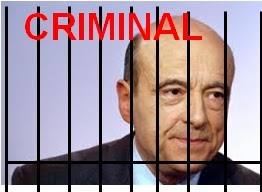
2002 France was ruled by a criminal.
But if you think you will see him behind
bars, don't hold your breath: the
French political class is making sure
that one of its most  (in)famous
members is shielded from such a fate
PARIS
This week's ruling by a French court seems at first of quite earth-shattering importance: for the first time since World War II, a former French head of state is convicted of committing crimes (in this case misuse of public funds) and is sentenced to two years in jail. But look more closely and you realize that this judicial decision is as connected to justice as Alaska is to Madagascar.

The facts go back a good quarter century when Jacques Chirac was not yet president of France, just mayor of Paris (but considering how Paris is actually a midsize version of France, he was for all intents and purposes almost president.) In his Etat dans l'Etat which was his Paris fief, Chirac behaved like a medieval baron, hiring (especially for phoney jobs known in French as emplois fictifs where town hall positions were used to pay people who never carried out a single task for the city, but many for Chirac and friends), firing, using public funds as he saw fit with scant regard to rules and regulations. Why should he? He felt above such mundane things as the law. And subsequent events proved him right. It took decades for the law to close in on him, because the whole legal system in our Western pseudo-democracies is designed to punish harshly the small fry, while members of the elite remain scot-free. Among the examples used to shield Chirac from justice: while president, he made sure a new law on presidential immunity was voted so that he could remain literally above the law, even for crimes committed before he became president - and we make fun of Berlusconi who engineered laws to protect himself from zealous judges.

After Chirac left office in 2002, the Sarkozy government made sure his predecessor was left alone. Now, we all know that there is little love lost between the two men: Chirac tried every trick in the book to prevent Sarkzoy's ascent, as revenge for the "Dwarf" backing his opponent, Balladur, in a previous election. So why would Sarkozy care about Chirac's fate? If anything he should be happy to see Chirac in jail. Not really. These guys are smart, they know when it is better to put their rivalry on hold and think about higher things. Sarkozy has no interest in a judicial precedent, of having a former French president prosecuted and, God forbid, even convicted, since he knows he would then be the next one (read my blog on Sarko's own abuse of his position.)

So Sarkozy did everything he could to protect Chirac. First, he made sure that the case would drag as long as possible after Chirac left office (five years). Then,  and this is one of the more shocking aspects of the Chirac case, the public prosecutor (who in this pseudo-democracy acts on order from the government - no prize for guessing whose orders) decided to drop all charges against Chirac. Now, that was too much in light of the overwhelming evidence as gathered by all the files seized and the witnesses heard. So, a seemingly courageous judge, egged on by pro-justice militants, said, "I don't care that you drop the charges, Mr Prosecutor, there is enough in this case to convict Mr Chirac." And so he did, to two years in jail. But, and here's the rub, he made sure it was a suspended sentence meaning Chirac would not actually have to go to jail.

Yes, you have heard right. If you are lowly riff raff and get caught stealing, you can be sure you will end up as a guest of the French Republic for a few years. But if you belong to the elite, no such worry. And then you wonder why people laugh derisively at the lofty motto of the state, Liberty, Equality and Fraternity. In France, as in all other pseudo-democracies, Lady Justice is far from blind: she has one eye open to recognize VIP's and be lenient towards them. And yet, one of the first decisions of the French Revolution was to abolish all privileges that the mighty had. Two centuries on, privileges for the elite still live on. Now you understand why the "system" made sure the case dragged for how long as possible, so that even if he were to be convicted, Chirac could claim to be too old and sick to serve his sentence. And yet, read the French papers and watch television, and the whole French political class is cheering and saying, "See, we have truly independent justice." They are elated that they have managed to protect one of theirs from the same fate most of them should know: jail.

The great French fable writer, La Fontaine, wrote in the 17th century that:

Selon que vous serez puissant ou misérable, 
Les jugements de cour vous rendront blanc ou noir. 


(Depending on whether you are rich or poor
Court rulings will acquit or condemn you)
Jean de La Fontaine, Les Animaux malades de la peste, 1678.

Lest you believe that my native country is the only one where double standards apply when it comes to justice, I have some enlightening news for you: the same thing happens in other Western mock-demcoracies where the rule of law is supposed to apply. In addition to Italy's already mentioned and notorious  Silvio Berlusconi, Britain's Tony Blair and former US president George W. Bush should be in jail now for war crimes: didn't they wage a war which was found to be completely illegal (says the UN) and unjustified (say themselves after no weapons of mass destruction were found) but killed 100,000 innocent Iraqis (not to mention 4,500 American servicemen)?  Shouldn't these two men, along with a host of Israeli prime ministers and generals, be now in the dock of the International Criminal Court in The Hague? No way, only Arab, Latin American, Asian and African rulers commit crimes, not Western ones. Funny, isn't it, that when it comes to individuals we find in all countries the same proportion of criminals, but not when we deal with politicians. In the West, politicians are angels. Yeah, right!

When Juppé, one of Chirac's underlings, took the rap
for his master, a judge sentenced him to jail. But
the two-tier justice system we have in France and
other mock democracies meant that instead
of spending a single day behind bars Mr. Juppé
went to teach in a Canadian university for a
year (I didn't know Canada accepted criminals as
visiting professors) and after returning to France
he claimed back BOTH his old jobs as mayor
of Bordeaux and foreign minister. Whoever
created politicians left the shame gene out of them.
And as for us citizens who allow this to happen,
well, we have the rulers we deserve.
When Sarkozy succeeded Chirac one of his first announcements was that his administration would be "beyond reproach." A whiff of wrongdoing and you're out, he said to his ministers. Revolutionary, you'd think. Think again. Suffice it to say that the current Foreign Minister, Alain Juppé, a close aide to...Chirac, whose prime minister he even was at one point in time, was found guilty of the same crimes as his mentor in 2004 and given a (again suspended!) jail sentence of 14 months. Yes, we currently have a criminal as a foreign minister.  Even in the United States, hardly an exemplary country when it comes to the rule of law (think Guantanamo) and democracy (remember W's "election" in 2000?) any evidence (let alone court ruling) of wrongdoing  would be enough to end a politician's career. Not in France, where the political class wears its proof of corruption as a badge of honor.
Feb. 2019 update: President Macron just nominated Juppé to the highest court in the land, the Constitutional Court. Yes, your eyes aren't playing tricks on you: he who is going to ensure people uphold the country's top law is himself a convicted felon.

Speaking of America, remember that even there where the rule of law is supposed to prevail, Nixon was found to have committed crimes which led to his having to resign in shame and yet he was never bothered. His successor, Gerald Ford, in a behavior similar to what Sarkozy is doing now for Chirac, pardoned the Criminal-in-Chief thus ensuring he could spend the rest of his life enjoying the spoils of his crimes, in peace.  Well, Ford owed it to Nixon who made him president. And I am not speaking here metaphorically: it was Nixon who made Ford president, not the American people since, as few people remember, Ford was NEVER elected either as president or as vice president: he was appointed by Nixon to replace his previous VP, Agnew, after the latter resigned over (already!) a corruption scandal. The fish rots at the head, as they say.

Interestingly, Ford's outrageous act came at the same time when Chirac became mayor of Paris and was starting to put in place the intricate web of patronage, corruption, phoney jobs (but real salaries and cost to taxpayers.) If he ever worried about whether he might be held accountable one day, he just looked across the pond and the unedifying example of the White House shenanigans, and just shrugged his shoulders saying to himself, "Nothing to worry about."

For a quarter century he was right.  The wheels of justice grind slowly, if at all, when we are dealing with the elite. And yet, had justice done its job in a timely fashion, Chirac would have been caught in the 1980's and jailed (I doubt he could have claimed old age and bad health then) and we would have been spared his presidency which, by all accounts, was an utter failure. There are indeed many advantages to having an efficient justice system rather than the two-tiered parody of justice we currently have.

The struggle for equality, the rule of law, the principle that NO ONE should be be above the law, for a truly blind justice, continues.

Saturday, December 10, 2011

Sailing away: Time for Britain to leave the European Union

PARIS
I haven't read the British press following last week's milestone decision by European Union (EU) leaders to move towards a more federal system with financial and budgetary convergence between their countries in order to solve the debt-induced crisis, but I wouldn't be surprised to see the following headline: "Europe isolated as Britain votes NO to treaty changes." Once again, and probably more radically than ever, Britain stands alone with 26 countries (using the euro and outside the eurozone) forging ahead on a new pact, and she standing in splendid isolation, the cornerstone of her policy towards Europe for a couple of centuries. Except, of course, that as a middle-sized power Britain cannot afford it any longer

To understand the current situation, just imagine that your friends have recommended you to the neighborhood club and upon joining it you requested a few privileges. First, that you be allowed to bring not only one guest but two. Then, that your dues should be only half of what other members pay. Plus a couple of other such exemptions which, considering how important you are to your friends, they all accepted to get you in. Then, as time goes by, you start making more and more demands, for instance that the club be open longer hours to accommodate your personal schedule; that you be allowed to bring your own caterer as the food served does not please your palate and a couple more requests of the same ilk. At that point, the other members rightly fed up join in unison with a rude expletive, the meaning of which is that everybody would be better off with you outside the club than inside.

This is exactly where Britain and the European Union find themselves now. Facing the admittedly worst crisis the Union has had since its inception 60 years ago, when all bandied together to come up with a solution, Britain said, "If I don't get my own, deal I won't sign to this one." The answer from the rest of the Club was to politely ignore Britain and move ahead with their agreement, anyway.

Are we surprised? Not really. Ever since the European Union was born, Britain had pooh-poohed it, when not tried outright sabotage. First, when it was set up (as the European Community) in the 1950's, Britain refused to join. Then, when it saw how successful the club was, it begged to join and did so in 1973 as a beggar,  rather than a founder, which meant it had to accept less good terms. Throughout the following decades, Britain kept on behaving in a most un-European way: Thatcher asked for a contribution rebate (the famous "I want my money back"); then they got exemptions on social issues; and, more pointedly when the single currency was formed, they refused to join. And last week, they asked for the unacceptable: exemption from financial rules. Considering that the current crisis is the consequence of lax regulations of financial institutions, this demand is completely crazy. Cameron claims that he wants to maintain the preeminent status of the City (London's financial district) which under the new rules might lose out to Frankfurt and Paris. This is a lot of hogwash: since Paris and Frankfurt will be subjected to the same rules as London, then we are talking about a level playing field. If London loses, then it means it wasn't competitive to start with, something the Tories, super-champion of competition should accept - but as we know they only accept competition when they are guaranteed to win. Also, last time I checked I thought Europe was operating as part of a single market (which the British always defend.) Now, Let David Cameron explain how we can have a single market without a single set of rules (never mind a single currency.) The truth of the matter is that the Tories are nothing more than the bankers' party and are determined to fight tooth and nail to protect the interest of their (pay)masters, even at a high cost to their own people and the rest of Europe.

With this latest rejection, the British have reached a crossroads. Their position will soon be untenable since at every EU summit, you'll have one set of meetings with 26 members making decisions and then calling the other EU member who will have little choice but accept, especially when it is about decisions where unanimity is no longer the rule. Britain's worst nightmare will become reality: there will be a two-tier Europe, a Tier 1 with all other EU members and a Tier 2 with Britain (unless in their self-delusion the British think that on their own they can be Tier 1, and all the rest Tier 2!) Permanently isolated an outvoted, Britain will find itself having to comply with rules it has had no say in their creation. How long will she put up with it?

I lived in Britain in the 1980s and since then have been a frequent visitor either on business or vacation and can claim to know the country pretty well. And one thing that still has not changed is their island mentality. I still hear many Britons when crossing the Channel saying "We're going to Europe," or "We in the UK do it this way, but in Europe they do it that way." The British have clearly psychologically never felt European. Will they ever?

So it is time the British (or, to be more accurate, the English) made up they mind. They have played obstructionist in Europe for too long, which is fine, if they have such a radically different view from Europe from all other 26 countries. I'm not saying their views are better or worse, right or wrong, but different. Then, David Cameron should do something that the so-called mother of democracies hates to do, ask the British people, in a referendum, what they want: be part and parcel of the European Union, not a mere free-trade area, with all that that implies, or keep their own views, maintain their sovereignty (or what remains of it) and therefore leave and make other arrangements.

These arrangements could entail:

- Negotiating a free-trade or special-partnership pact with the European Union (maybe like what is being offered to Turkey)

- Move closer to the US and Canada (maybe in a North Atlantic free-trade area) since they feel so much in sync with their "cousins" from across the pond

- Decide to focus on what Britain does best (media, culture) and become  a high-value-add export oriented country which will allow it to survive alone outside the European Union.

Of course, there are risks involved. Britain trades more with the EU than any other country or bloc, so a realignment is not easy to achieve. At home, if the UK leaves the EU, it is almost certain that Scotland will split and apply for readmission as an independent nation, which would mean the end of the United Kingdom. The EU will also suffer a bit, as it loses an important economy and important population, but considering it has 500 million people, a 12% loss and corresponding reduction in GDP will not be insurmountable and anyway will be replaced by the arrival of new countries such as Croatia in 2013 and subsequent ones. An EU-less Britain is likely to suffer way more than a Britain-less EU.

Whatever the solution, it is crunch time for the British. Since EU rules do not consider ejection, please do us and yourself a favor and make up your mind, which you seem to have already done, and leave. It is always sad when a marriage comes to an end, but it is always preferable to end it sooner, and on amicable terms, than later and bitterly, especially when the house is on fire.  

Sunday, December 4, 2011

Acquisition #13: SAP's $3-billion cloud(y) adventure


PARIS (UPDATED Feb. 27, 2012)
Unless you are superstitious (which I am not since my grandmother always told me it brought bad luck to be superstitious) you will  be thrilled with the news that the biggest HR software company in the world  decided last weekend to buy SuccessFactors (SFSF), one of the up-and-coming web-based vendors, in this year's 13th M&A deal. Well, you might be thrilled at this acquisition until you start looking at the details. 

Context and rationale of the acquisition
Although SAP is hardly a novice at acquiring other software companies (Business Objects is one such prominent example), their product and customer strategy has always been mainly of the organic variety until it showed its limits. And limits it has shown in two respects, the enterprise area and the newish cloud-computing business. 

First, the enterprise area: SAP created the enterprise software and it therefore is quite embarassing that in one of the fastest growing enterprise areas, talent management, it has failed. Global companies running SAP as their HR system of record have repeatedly gone for the likes of SFSF and Taleo, deemed more in line with their talent needs than their incumbent HR vendor (Oracle and PeopleSoft do not fare any better in that respect, by the way. ) And many companies, such as US-based Kimberly-Clark, have simply moved the whole HR suite, if not their financials applications as well, to cloud-based Workday. This is bad for SAP (and the two members of the "SOP" triptych) since every customer that jumps ships means less high-margin maintenance revenue. And when you know that maintenance now makes up the lion's share of traditional ERP vendors' bottom line, it is not hard to understand the future is not very bright. 

Second, the reason why corporate customers have been adopting best-of-breed systems is that they provide the needed functionality in a radically new way: on the web, rather than the good old implementation within their company's walls, with a new way of licensing, maintaining and upgrading the system (see my blog comparing the two approaches, "Old Versus New".)  Like the other software dinosaurs as I call them, SAP could see the market changing tacks and had to do something to prevent the coming customer hemorrhage and its market irrelevance. So, taking a leaf from the book of its nemesis, serial acquirer Oracle, it decided that  "if we can't beat'em, let's buy 'em."


Third, SAP's own efforts at building a web-based offering, Business ByDesign, has been, to put it charitably, far from successful. It has taken inordinately long to develop and customers have not been exactly running in a  stampede to buy it.


Why SuccessFactors?
A good question to start with is "why SFSF?" There are other vendors in the HR space, even with a product footprint similar to SFSF's. Taleo is the most obvious name, but as a European company why didn't SAP look at vendors closer home? As I showed in my blog on M&A activities in HR technology, American vendors tend to buy other American companies and European software makers their counterparts from the same region, if not the same country. SAP could have acquired UK-based Lumesse or France-based TalentSoft (with their own issues of being privately owned,) or (also privately owned) Swiss vendor Umantis which brings the double advantage of being in the German-speaking area SAP dominates as well as the talent management partner of SAP's Business ByDesign offering.  


But clearly SAP wanted a vendor that would not compete too much with its own HCM solution while being global and large enough to help it increase its market share meaningfully. That left only two vendors of more or less equal size, Taleo and SFSF. Since Taleo had grown more organically than SFSF (even if it has acquired a couple of companies of its own) it was a closer fit to SAP's culture. However, when I looked at my HR customer database (what I call the WOW database -Who Owns What) I saw that there are more SAP HR customers running Taleo than SFSF. It therefore makes more sense to go after the company with fewer joint customers since it offers more cross-selling opportunities.  The fact that SFSF was founded by Lars Dalgaard, a Dane, was an added bonus as SAP felt  that a European senior executive would fit more easily in Walldorf. Only time will tell whether they were right on this point.


A more intriguing question is why SuccessFactors management was keen to sell (out?) Apart from the nice premium for shareholders, why would Lars Dalgaard want to become a mere senior executive at unexciting SAP when he was top dog with the company he founded? The answer is that with the number of acquisitions, and in a short period of time, SFSF bit off more than it could chew and found itself overwhelmed with the task of integrating disparate systems. With SAP it can find the people and financial resources to fix the integration issues which were threatening to bring down the company. Not to mention that now that it is part of a large and profitable company, SFSF's losses can be diluted in SAP's balance sheet with no need to answer the recurring, embarrassing question: "When will you become profitable?"

Overpaying for...
The acquisition is already starting with the wrong foot. In a volatile market, SAP could have bought SuccessFactors at a much better (i.e., lower) price than a whopping 16 times revenue. When Oracle bought PeopleSoft (PSFT) in the mid-2000's, an operation I was involved with, it initially offered $6bn, that's just twice what SAP has offered for SFSF. And yet, PeopleSoft had ten times more customers  than SFSF (and I'm talking here only about PSFT HCM, to avoid being accused of comparing apples with oranges.) PSFT was profitable when SFSF is still losing money. PSFT was the undisputed #1 in HCM, and #2 in ERP, a global vendor when SFSF's global reach is limited, a leader in just a segment of HCM, and even in Talent Management it faces strong competition from Taleo. Oh, and we are talking about 2003 dollars, which means the deal's value in inflation-adjusted currency is even higher. If you want a more recent acquisition as a comparison point, Taleo's purchase of Jobpartners last June was at a reasonable 2x revenues (more information on the wave of consolidations in the above mentioned blog.) No matter how you slice and dice it, the amount paid by SAP is hard to justify and is evidence of how desperate SAP is to "do something."

...too many issues... 
Once you start at looking at what SAP bought there is no way you can escape the fact that it will create more problems than it is likely to solve.

The pros: Let's start on a positive note. Now, SAP can claim with a straight face that it has a SaaS talent management offering, something they knew Career OnDemand was NOT (see my comments following the demo I attended at the HR Technology Conference in Las Vegas last October.) But looked at from a customer's perspective, what has changed? Customers will still have to interface SFSF with the HR admin features in SAP, regardless of who the owner is: the work will still have to be done until there is an off-the-shelf integration.

The cons: Integration nightmare. Even when there is full compatibility (meaning no feature/module overlap between the two offerings) creating a "seamless" integration (data, process, user experience) takes years. In this case, the complexity is compounded by the fact that:


(1) SFSF is itself busy integrating the various pieces it has bought since last year (For details see my above-mentioned post, "2010-2011: Two momentous years of consolidation in the HR space")  


(2) What will happen to the still-unproven HR admin piece (Employee Central) SFSF had developed to compete with...SAP, among others? There are only three possible options:
 
- Will SAP kill it? Then how can it say it is moving to a cloud model?

-Will it keep it (maybe integrating it within its Business ByDesign cloud solution) and then compete with itself? That would be shooting itself in the foot as the cloud offering cannibalizes the old one.

- Will it then kill the old, on-premise SAP offering and move to the SFSF/Plateau offering? Unthinkable when you know there are thousands of customers on the on-premise offering, who have spent years and (for some of them) hundreds of millions of dollars to  implement it. Moving them will not be easy, if at all feasible.

(3) the issue of overlapping offerings such as the Career OnDemand module I mentioned earlier or SAP's reporting functionality (HANA) which will compete with the one SFSF has bought from Inform, not to mention the two Learning applications both have (see below graph on the product overlap of the three vendors: SAP, SFSF and Plateau acquired last April by SFSF.)  I am willing to bet the best sauerkraut in all Germany that come April 2012 when Career OnDemand is supposed to be released, nothing will come our way, and it will be quietly buried, acknowledging SAP's failure to evolve towards a true, organically grown SaaS model. 


Contrary to SAP's claims, there is quite a lot of duplication in its new offering.
Sorting it out will be a big challenge for which SAP has little experience.
(For simplicity's sake I am  identifying the major offerings based on
where they currently sit, SFSF or Plateau)


Sales/marketing issues: Integration between the two companies goes way beyond products. As experience shows, people buy from people. If SAP hasn't been able to make a killing in the TM space, it wasn't only because its offering wasn't on a par with the best-of-breed solutions, but also because SAP sales reps sell what they know best: traditional SAP software by stressing its engineering prowess. SFSF's culture is more start-up-like and its sales people know how to make the SaaS pitch which is different from the on-premise one. It reminds me of when Oracle moved from the database business into applications and couldn't understand why it wasn't as successful. Only when it realized that business applications are sold to CFOs and heads of HR and not CIOs, and that  you have to talk business value and processes  and not about the beauty of data clustering, did they start making some inroads. SFSF's marketing organization is also more attuned to the market's needs than SAP's gigantic machine. Expect some significant attrition from the SFSF ranks, especially when the jobs market improve.


...and little return
You might say in SAP's favor that since many of their customers were moving to SFSF, well, they might as well have the company in SAP's fold so that the revenue comes to SAP. First, considering the price SAP has paid, it will take at least 6-8 years for the transaction to be financially profitable. Second, this overlooks two facts: customer behavior and Talent Management (TM) as part of ERP.

Customer sentiment: many customers selected SFSF or Taleo, among others, because they wanted to move away from all the issues involved with what I call the software dinosaurs (see my blog from earlier this year, "Can software dinosaurs reinvent themselves as web-based vendors".) Now that SuccessFactors is being SAP-ized, customers may think twice before selecting that particular vendor (of course, SAP's hope is that the market will believe that the opposite is going to happen, that it is SAP which will be SuccessFactor-ized - but just look at the asymetry in size and you will have the answer to your doubts.) Actually, I already know of two companies (one of them a client) running SAP HCM and who were looking for a TM system; they had shortlisted SFSF and are now dropping it from the shortlist. Of course, two anecdotes do not a trend make, but it is worrying.  It is far from assured that this move will protected SAP's installed base but one thing is already clear: non-SAP customers will be less inclined to adopt a TM system highly interlocked with a competing HR system.
This is talent management, not ERP: Considering SAP's $16-billion overall revenues, SFSF's $200 million  are so puny that one can wonder how it will make any difference to the company's bottom line. In all fairness, compared to just SAP's HCM revenues, SFSF will add a not insignificant 20%, thus pushing Oracle further down the league table, but again at what price, assuming customers are not put off; and if SAP wants to become a SaaS vendor it will have to look beyond HCM. Even by adding SFSF's revenue to SAP's subscription revenue, it barely grows to a paltry 5% and of course you are mixing true SaaS with non-SaaS in a catch-all "cloud" category.


Even if SAP were to discard its traditional Jurassic-era HCM offering in favor of SFSF, which is as likely to happen as is Christmas to become a national holiday in Iran, SAP will need to keep on making many more and bigger acquisitions of SaaS vendors. I wonder whether there are enough companies out there and how SAP will be able to execute on so many acquisitions and integrations to become credible. At best it will become a dual-offering company, with all the cultural, strategic, and product schizophrenia associated with such a hybrid model. This muddying of the software waters is bound to create much confusion in the market (in addition, remember that SFSF comes with its own hybrid issues with the on-premise customer base from the legacy Plateau offering.) At least Oracle did the right thing after it bought all those different companies: it rationalized them all on the successor product, Fusion. What Oracle lacked in execution, it made up for (partially) in clarity. No such clarity is coming from SAP. 


The only strategy that is likely to pay off in the long-term is to develop/acquire a true SaaS product (and not that half-baked on-premise + hosted offering) and then start moving customers to it. For example, build all new talent management + additional countries on this new SaaS product (SFSF -based or other) and tell customers that if they want to use the new features they have to move towards the cloud. Not only will that give customers an incentive to do so, but by reducing the numbers of customers SAP has to support on the on-premise solution, makes the business more profitable. This of course entails doing it not only for HR but for the whole ERP offering, a difficult, even risky, move fraught with many dangers, but some software companies (such as Ultimate in the HR space) have done it, so it is not a completely outlandish idea. So far, however, the noise from Walldorf does not seem to countenance such a move.

And the winner is...Workday, so far the only true SaaS company in the ERP+HR space, which sees a serious competitor taken out of the equation (even with SFSF, SAP's core HR offering remains an on-premise one, not in the cloud) as well as its SaaS-based approach vindicated by the day. Worse, the biggest strategic failure of SAP (and also Oracle) is that they don't seem to get that SaaS is not just a functional hole to be plugged with an acquisition: it is a radical departure from the old ERP business model. In the olden days, you were missing a decent CRM system? No problem, just buy Vantive or Siebel. If what you were looking for was a winning HR system, well, just buy PSFT. But you can't buy your way into the SaaS world: the culture, product architecture, selling, maintenance, upgrade, absence of need for hardware, it all is so different. You need to reinvent yourself completely. Somebody explain to me how giant SAP will do that by buying tiny SFSF.


SFSF, customers and the wider industry, would have been better off had SFSF been left to continue to develop as an independent company. It was on its way to a bright future. With its new HR admin module, and provided it integrated well the different pieces it had bought,  it could have competed with Workday for the trophy of successor to PeopleSoft as HR vendor leader. Sadly, this was not to be. As the Jesuits' motto goes, Sic transit gloria mundi ("How the glory of the world passes.") For those more cinematically inclined, I am reminded of Marlon Brando's memorable line in the 1950s movie The Waterfront, where he expresses his frustration and disillusion at the prizefighter career that could have been his: "I coulda been a contender."

Most studies find that at least half of acquisitions fail to deliver tangible results and a decent ROI. Based on the above there is little doubt in my mind which half this acquisition belongs to. The only people that would gain from this acquisition (and are on cloud 9, if you'll allow me an easy pun) are SFSF stockholders who get an incredible 52% premium and advisors JP Morgan and Morgan Stanley who, as is their wont, encouraged the premium price, knowing that the higher the price paid, the higher their fees. 


I would go further and say that, barring the swift adoption and execution on the from-on-premise-to-cloud strategy I outlined above, the only M&A operation involving SAP which would make sense is one where it is not the predator, but either the prey or an equal partner with one of the three following companies: IBM, HP or Microsoft. That may well be the only way SAP can credibly stand up to the Oracle threat. Everything else smacks of desperation, is evidence of limited strategic view and is more likely to fail than succeed. 


UPDATE: Feb. 27, 2012


I know that several of SAP's top executives have read my blog, whether that has had any impact on their thinking and decision-making process, I do not know. But for the first time in years SAP has blown my mind away, with the Feb. 22 announcement that SFSF will become the basis of SAP's HR cloud offering and that, while continuing to invest in the traditional on-premise product (the R/3 product line now known as SAP ERP HCM), customers will be encouraged to move to the true SaaS product. I had to pinch myself and rub my eyes several times to make sure I wasn't dreaming. Could it be true? Yes, SAP finally is getting it. Unlike Oracle, which is still touting a mongrel on-premise + hosted product and slapping the SaaS label on it, SAP is finally showing it understands what being a true cloud vendor means and following (or at least mirroring) the advice I gave in this very blog post. Some of the product direction seems almost taken literally from my analysis. 


On EmployeeCentral, I wrote "Will SAP kill it? Then how can it say it is moving to a cloud model?" SAP decided to keep it and expand it


"...the market will believe that ...it is SAP which will be SuccessFactor-ized": that is happening to a larger extent than I thought with the SFSF team, product being retained and its SaaS culture emphasized


"The only strategy that is likely to pay off in the long-term is to develop/acquire a true SaaS product (and not that half-baked on-premise + hosted offering) and then start moving customers to it." This is exactly what SAP has announced.


I further gave an example of how SAP could do that: "Build all new talent management + additional countries on this new SaaS product (SFSF -based or other) and tell customers that if they want to use the new features they have to move towards the cloud. Not only will that give customers an incentive to do so, but by reducing the numbers of customers SAP has to support on the on-premise solution, makes the business more profitable." Again, largely what SAP has decided to do. 


I then added that this strategy was unlikely to happen since "So far, however, the noise from Walldorf does not seem to countenance such a move." I wrote that on Dec. 4: two months and a half later Walldorf changed its tune and embraced the strategy I devised for them.


Should I ask SAP for royalties based on this unacknowledged picking of my brain?  Of course, this strategy could be derailed at the execution stage but considering how clear, detailed and compelling  the product direction is, I'll give them the benefit of the doubt. Seems that there is still fire in the old dinosaur, after all.


Compare this with Oracle's own hastily put-together webcast announcement on their plans with Taleo two days later (they are clearly feeling the pressure from SAP)  where the presence of President Mark Hurd, Taleo CEO  Michael Gregoire and Product Development Thomas Kurian could not hide the fuzziness of the "plan" (if there is such a thing). Also, whereas SAP put the SFSF talent firmly in charge of the new business, Oracle who suffers acutely from NIHS (Not Invented Here Syndrome) gave no indication what Michael Gregoire's role will be (once the acquisition is completed, you can expect him to quietly depart.) The only clarity was that Oracle continues, against all market momentum, to stick to its hybrid model, refusing to bow to the inevitable: that true SaaS is here to stay, and instead of rejecting it they should embrace it. Oracle will probably come round to it at one point in time, but by then SAP will have stolen a march on them.