SHANGHAI
Surprising as it may seem for the globe-trotter I am, until this week I had never set foot in China. Although I had worked on many global projects which involved rolling out an HR system for a Chinese workforce the opportunity never arose for me to visit the ancient land known to Marco Polo as Cathay* (the name is still used by one of the most successful airlines in the world, based out of Hong Kong.)
It was therefore with great trepidation that I boarded the world's largest aircraft, the Airbus A380, for the longest trip east that I had ever taken in order to spend most of the week in Shanghai with the local subsidiary of a multinational client. This was a unique opportunity to gather business requirements face to face with HR users in their local environment, something only imperfectly done in virtual meetings, on the phone or by email.
You soon realize that if in China rules and laws may not be voted on by a democratically elected parliament, but rather handed down by the omnipotent Communist Party, they are adhered to ferociously, as I was reminded when, during one of the workshops I led, I suggested we shorten the lunch break from one hour to 45 minutes. The reaction was a categorical NO. Labor laws are labor laws: one hour's break for lunch is one hour. Can't say I was shocked since that is exactly the same rule as in France (but outside the rest period, the Chinese workforce is a hard working one and I was impressed by the quality and dedication they bring to the task.) Actually, many other aspects of China's labor laws seem to be directly inspired from France's: such as the 1-2% of a company's payroll which must be set aside for the worker union to spend on employee benefits. But then French laws are at times very socialistic, if not outright Communist (ever wondered why the Labor Code in France is a little red book?)
A rapidly changing country
As everybody knows, China has managed to bring hundreds of millions of people into middle-class wealth faster than any other country on earth: in the past 25 years income per person has risen 13 times, whereas in the rest of the world the figure is barely 3 times. I see on Shanghai overcrowded roads more SUVs than anywhere else but the US. Beijing has more billionaires than New York. If there ever was a national success story it is China. And yet serious problems are looming: it is still an autocratic country, unemployment is rising, especially in the poorer rural areas in the country's western half, inflation is high (Shanghai home prices rose by 20% last year), the population is greying fast as a result of the one-child policy aiming at reining in demographic pressure, pollution shows its ugly face in many places with foul air a constant irritant. Some un-Chinese traits such as individualism and Western-style consumerism are on the rise in this increasingly unequal People's Republic. (I always marvel at Chinese tourists who buy designer bags at Paris upscale department stores for a price that is higher than many workers back home make in a year)
Now, to the topic at hand, requirements to manage a Chinese workforce as part of a global HRIS. In some aspects HR law and practice in China may be complex, even cumbersome (but is there a place where that is not the case?) However, in many other aspects it is quite simple and even free-market based, reminiscent of the practice in the (income-tax free) Persian Gulf states. For instance, in Europe and America, there is a quite clear-cut distinction between permanent employees and contractors, HR processes apply fully to the first, not to the second. In China, there are no contractors: everybody is a permanent employee. There are also no part-time workers. In other countries, some employees may work only 30% of the normal schedule, and in some cases be paid differently, all depending on labor agreements and regulations. In China, if you're going to work for a company, you work full time. Otherwise, go somewhere else. And no labor agreements either, which makes it much easier to set up compensation plans and eligibility rules
Over lunch, when the Head of HR asked me why there were so many strikes in France (yes, that national trait has made it to the other end of the world) I replied, "For the usual reason: to get more money." She looked very surprised: "Really? But if they want more money and they are not getting it from their current employer, why don't they just move to another better-paying company?" Admirable logic, which makes sense in a fast-growing, emerging market like China, but, alas, does not apply in sclerotic European countries like France.
Language-wise (you may want to brush up on my 5 pillars of "glocalization") if you're going to roll out a global HRIS in China, make sure all self service features are available in Mandarin. Otherwise, the system won't be used. Many HR power users, even if working for a multinational company, will struggle with English, so having the whole system in Mandarin is a must.
Workflows with different levels of approvals is also a must-have in a country where deference to senior management is part and parcel of the culture. Electronic notifications have made great progress in the Middle Kingdom but some document still need to be printed out for signature and be handed out to the relevant recipient. If you ever wondered why China is referred to as the Middle Kingdom it's simply the name in Chinese: The first character for the name is a horizontal rectangle cut in half by a vertical stroke, meaning, you've guessed, Middle. Like all great societies, China sees itself as the center of the universe. Can't blame them; after all, they are the most populous nation on earth, soon to be the richest, and the one with the longest continuous civilization in the world.
HR rules and HR Departments are nothing new in this country. The US only got its Civil Service with its grades and steps and examinations at the end of the 19th century, but the Chinese Ming dynasty, which ruled the country until 1644, already had a Department of Personnel with a nine-grade bureaucracy and legendary examinations one had to sit for and pass before being entitled to a position. Modern China is simply the heir to a long, centuries-old tradition.
Among the various HR domains and processes, time recording can be quite complex in many Chinese companies, especially manufacturing now that China has become the world's factory. However, soaring taxes, transportation and energy costs means that China's labor force is no longer as cheap as it was. China will increasingly have to move up the value chain, which explains the strong emphasis on training, competencies, learning and development, and executive assessment. Again, nothing surprising in this ancient Confucian culture where learning values are rated very high.
Payroll, is of course, highly regulated like everywhere else, but China is far from being the worst offenders. And there are limits to nannying employees: for instance, salary advances, which in some countries are mandatory if requested by the employee, simply don't exist in China You are paid for the work done, not the promise of it. For any help, go to your family, is the message in a culture where family bonds are stronger than in the West, but weaker than in Mao's times (In China people don't resort to banks for their savings needs but rather to the family or peer-to-peer networks.)
Absence management is also complex, and China is rather unique in that it distinguishes between absence types mandated by law and those awarded by a company as a benefit for a differentiated treatment. The former have to be taken during the take period, and if the employee leaves before its end they are compensated; whereas the latter, if not taken, are lost and are not compensated. And just as part-time employees are unusual, taking an unpaid leave or a sabbatical is unheard of for most people. Note the existence of many recruiting and training agencies (such as Zhaopin or 51job.)
Benefits involve many players: government, worker union and employer. Noteworthy that if some benefits (such as birthday allowance) are not provided by the worker union then the employer will play the substitute role and provide them.
In a country where education has long been seen as a passport to success, small wonder that competency frameworks, training agencies and learning models are all the rage. Many companies would finance employee degrees in exchange for a guaranteed stay with the company (similar to tuition reimbursement by US companies.) For some useful training (such as languages), private enrollment would also be refunded by the employer if the employee brings evidence of the certification thus earned.
China's HRIS vendors hold their own
To meet the HRIS needs of Chinese companies, whether domestic or subsidiaries of multinationals, the array of providers is quite large. SAP's market share is largely around its on-premise offering, and Oracle's is based on PeopleSoft. Cloud vendors are represented by Workday, a distant third but growing fastest. Kronos is well-entrenched when it comes to time management. Unsurprisingly for such a highly patriotic, even nationalistic, country, Chinese vendors have, together, a majority market share. They include household names in China such as Beisen, the undisputed talent company, and other vendors such as Neusoft (or even micro-blogging firm Weibo) covering various HR processes, when not the whole gamut of functions.

The biggest challenge facing homegrown vendors is how to go global, not an easy task when some tools which we take for granted are not available in China. First-come visitors to China may be surprised, even shocked, to find that social media and internet tools like Facebook and Google are banned (unless you, or your company, are lucky to have your own VPN.) In the West, and even the rest of the world, so much HR work, actually so much business work, involves using these platforms that you may be thrown offbalance when you realize you cannot keep up with your friends (on Facebook), get your email (on Gmail), check a video on YouTube, or plan an itinerary on Google Maps. Surprisingly and erratically WhatsApp, despite being a Facebook product, is allowed to operate in China. The Chinese make do with local variants such as Baidu, Weibo or WeChat (which is integrated with LinkedIn.).
The Chinese are a justifiably proud nation, but also a pragmatic one. They will find ways to live up to their full potential and be a full member of the global business community, something they've longed for and craved for a long time.Needless to say that this post only covers the People's Republic of China (PRC) aka Mainland China. Taiwan, Hong Kong and Macao are completely different in terms of context, HR maturity and vendor landscape. In due course they will warrant their own blog post.
(The blogger is currently crisscrossing the globe gathering requirements for a multinational company. Next stop: Detroit, USA.)
(This is the latest in a series of wide-ranging articles focusing on a single country. Previous posts:
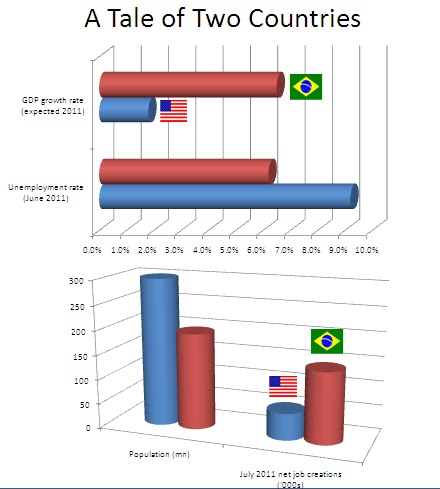
August 2011: Brazil Rising: Thoughts on HR, technology and an emerging giant
December 2012: My 20-Year Affair with Spain - with more than 9,000 views it is one of my most popular blog posts
June 2013: Thoughts on India, its HR/technology space
Nov. 2014: Of Switzerland, the country, its HR practice and technology landscape)
NOTE: All photos are the work of the blogger and copyright applies
*I strongly recommend Gary Jennings' superb novel, The Journeyer, about the great man's 13th- century travels throughout a China few people had ever seen then. 1,000 pages which you can't put down until you reach the end. For anybody wanting to understand China's wrenching changes in a historical perspective, Jonathan Spence's In Search of Modern China is a must-read. Nobel-Prize winner Pearl Buck's novels, set in pre-Communist post-Imperial China, have a lot to say about the Chinese soul and experience. The movie buff I am relishes Zhang Yimou's movies (especially when the incomparable Gong Li is in them): Raise the Red Lantern, Ju Dou, Red Sorghum and Flying Daggers are favorites. He is also the man behind the highly acclaimed opening and closing ceremonies at Beijing's 2008 Olympics.
 |
| The Oriental Pearl Tower seen from the Bund. As spectacular as un-Chinese since, unlike Muslim minarets and Gothic cathedrals, Chinese palaces, pagodas and pavilions have traditionally been low-rise affairs |
It was therefore with great trepidation that I boarded the world's largest aircraft, the Airbus A380, for the longest trip east that I had ever taken in order to spend most of the week in Shanghai with the local subsidiary of a multinational client. This was a unique opportunity to gather business requirements face to face with HR users in their local environment, something only imperfectly done in virtual meetings, on the phone or by email.
You soon realize that if in China rules and laws may not be voted on by a democratically elected parliament, but rather handed down by the omnipotent Communist Party, they are adhered to ferociously, as I was reminded when, during one of the workshops I led, I suggested we shorten the lunch break from one hour to 45 minutes. The reaction was a categorical NO. Labor laws are labor laws: one hour's break for lunch is one hour. Can't say I was shocked since that is exactly the same rule as in France (but outside the rest period, the Chinese workforce is a hard working one and I was impressed by the quality and dedication they bring to the task.) Actually, many other aspects of China's labor laws seem to be directly inspired from France's: such as the 1-2% of a company's payroll which must be set aside for the worker union to spend on employee benefits. But then French laws are at times very socialistic, if not outright Communist (ever wondered why the Labor Code in France is a little red book?)
 |
| Replica of Xi'an Terracotta Army soldier, gifted to the blogger by the Chinese delegation to the UN World Tourism Organization where he worked in the 1990s |
A rapidly changing country
As everybody knows, China has managed to bring hundreds of millions of people into middle-class wealth faster than any other country on earth: in the past 25 years income per person has risen 13 times, whereas in the rest of the world the figure is barely 3 times. I see on Shanghai overcrowded roads more SUVs than anywhere else but the US. Beijing has more billionaires than New York. If there ever was a national success story it is China. And yet serious problems are looming: it is still an autocratic country, unemployment is rising, especially in the poorer rural areas in the country's western half, inflation is high (Shanghai home prices rose by 20% last year), the population is greying fast as a result of the one-child policy aiming at reining in demographic pressure, pollution shows its ugly face in many places with foul air a constant irritant. Some un-Chinese traits such as individualism and Western-style consumerism are on the rise in this increasingly unequal People's Republic. (I always marvel at Chinese tourists who buy designer bags at Paris upscale department stores for a price that is higher than many workers back home make in a year)
Now, to the topic at hand, requirements to manage a Chinese workforce as part of a global HRIS. In some aspects HR law and practice in China may be complex, even cumbersome (but is there a place where that is not the case?) However, in many other aspects it is quite simple and even free-market based, reminiscent of the practice in the (income-tax free) Persian Gulf states. For instance, in Europe and America, there is a quite clear-cut distinction between permanent employees and contractors, HR processes apply fully to the first, not to the second. In China, there are no contractors: everybody is a permanent employee. There are also no part-time workers. In other countries, some employees may work only 30% of the normal schedule, and in some cases be paid differently, all depending on labor agreements and regulations. In China, if you're going to work for a company, you work full time. Otherwise, go somewhere else. And no labor agreements either, which makes it much easier to set up compensation plans and eligibility rules
 |
| Art Deco glory. East meets West at the spendid waterfront neighborhood known as the Bund |
Over lunch, when the Head of HR asked me why there were so many strikes in France (yes, that national trait has made it to the other end of the world) I replied, "For the usual reason: to get more money." She looked very surprised: "Really? But if they want more money and they are not getting it from their current employer, why don't they just move to another better-paying company?" Admirable logic, which makes sense in a fast-growing, emerging market like China, but, alas, does not apply in sclerotic European countries like France.
Language-wise (you may want to brush up on my 5 pillars of "glocalization") if you're going to roll out a global HRIS in China, make sure all self service features are available in Mandarin. Otherwise, the system won't be used. Many HR power users, even if working for a multinational company, will struggle with English, so having the whole system in Mandarin is a must.
Workflows with different levels of approvals is also a must-have in a country where deference to senior management is part and parcel of the culture. Electronic notifications have made great progress in the Middle Kingdom but some document still need to be printed out for signature and be handed out to the relevant recipient. If you ever wondered why China is referred to as the Middle Kingdom it's simply the name in Chinese: The first character for the name is a horizontal rectangle cut in half by a vertical stroke, meaning, you've guessed, Middle. Like all great societies, China sees itself as the center of the universe. Can't blame them; after all, they are the most populous nation on earth, soon to be the richest, and the one with the longest continuous civilization in the world.
 |
| It's all about Human Resources |
HR rules and HR Departments are nothing new in this country. The US only got its Civil Service with its grades and steps and examinations at the end of the 19th century, but the Chinese Ming dynasty, which ruled the country until 1644, already had a Department of Personnel with a nine-grade bureaucracy and legendary examinations one had to sit for and pass before being entitled to a position. Modern China is simply the heir to a long, centuries-old tradition.
Among the various HR domains and processes, time recording can be quite complex in many Chinese companies, especially manufacturing now that China has become the world's factory. However, soaring taxes, transportation and energy costs means that China's labor force is no longer as cheap as it was. China will increasingly have to move up the value chain, which explains the strong emphasis on training, competencies, learning and development, and executive assessment. Again, nothing surprising in this ancient Confucian culture where learning values are rated very high.
 |
| The blogger ready to board the Shanghai MagLev Train. At an average speed of 300 km/186 m per hour, with a peak speed of 430 km/237 m per hour, it is the world's fastest train. It is also the only one that runs on magnetic-levitation technology. Whether it is profitable remains to be seen as it is pricey and covers a short distance (in a highly congested area, though) |
Payroll, is of course, highly regulated like everywhere else, but China is far from being the worst offenders. And there are limits to nannying employees: for instance, salary advances, which in some countries are mandatory if requested by the employee, simply don't exist in China You are paid for the work done, not the promise of it. For any help, go to your family, is the message in a culture where family bonds are stronger than in the West, but weaker than in Mao's times (In China people don't resort to banks for their savings needs but rather to the family or peer-to-peer networks.)
Absence management is also complex, and China is rather unique in that it distinguishes between absence types mandated by law and those awarded by a company as a benefit for a differentiated treatment. The former have to be taken during the take period, and if the employee leaves before its end they are compensated; whereas the latter, if not taken, are lost and are not compensated. And just as part-time employees are unusual, taking an unpaid leave or a sabbatical is unheard of for most people. Note the existence of many recruiting and training agencies (such as Zhaopin or 51job.)
Benefits involve many players: government, worker union and employer. Noteworthy that if some benefits (such as birthday allowance) are not provided by the worker union then the employer will play the substitute role and provide them.
In a country where education has long been seen as a passport to success, small wonder that competency frameworks, training agencies and learning models are all the rage. Many companies would finance employee degrees in exchange for a guaranteed stay with the company (similar to tuition reimbursement by US companies.) For some useful training (such as languages), private enrollment would also be refunded by the employer if the employee brings evidence of the certification thus earned.
China's HRIS vendors hold their own
To meet the HRIS needs of Chinese companies, whether domestic or subsidiaries of multinationals, the array of providers is quite large. SAP's market share is largely around its on-premise offering, and Oracle's is based on PeopleSoft. Cloud vendors are represented by Workday, a distant third but growing fastest. Kronos is well-entrenched when it comes to time management. Unsurprisingly for such a highly patriotic, even nationalistic, country, Chinese vendors have, together, a majority market share. They include household names in China such as Beisen, the undisputed talent company, and other vendors such as Neusoft (or even micro-blogging firm Weibo) covering various HR processes, when not the whole gamut of functions.

The biggest challenge facing homegrown vendors is how to go global, not an easy task when some tools which we take for granted are not available in China. First-come visitors to China may be surprised, even shocked, to find that social media and internet tools like Facebook and Google are banned (unless you, or your company, are lucky to have your own VPN.) In the West, and even the rest of the world, so much HR work, actually so much business work, involves using these platforms that you may be thrown offbalance when you realize you cannot keep up with your friends (on Facebook), get your email (on Gmail), check a video on YouTube, or plan an itinerary on Google Maps. Surprisingly and erratically WhatsApp, despite being a Facebook product, is allowed to operate in China. The Chinese make do with local variants such as Baidu, Weibo or WeChat (which is integrated with LinkedIn.).
The Chinese are a justifiably proud nation, but also a pragmatic one. They will find ways to live up to their full potential and be a full member of the global business community, something they've longed for and craved for a long time.Needless to say that this post only covers the People's Republic of China (PRC) aka Mainland China. Taiwan, Hong Kong and Macao are completely different in terms of context, HR maturity and vendor landscape. In due course they will warrant their own blog post.
(The blogger is currently crisscrossing the globe gathering requirements for a multinational company. Next stop: Detroit, USA.)
(This is the latest in a series of wide-ranging articles focusing on a single country. Previous posts:
August 2011: Brazil Rising: Thoughts on HR, technology and an emerging giant
December 2012: My 20-Year Affair with Spain - with more than 9,000 views it is one of my most popular blog posts
June 2013: Thoughts on India, its HR/technology space
Nov. 2014: Of Switzerland, the country, its HR practice and technology landscape)
NOTE: All photos are the work of the blogger and copyright applies
 |
| From the blogger's library |
*I strongly recommend Gary Jennings' superb novel, The Journeyer, about the great man's 13th- century travels throughout a China few people had ever seen then. 1,000 pages which you can't put down until you reach the end. For anybody wanting to understand China's wrenching changes in a historical perspective, Jonathan Spence's In Search of Modern China is a must-read. Nobel-Prize winner Pearl Buck's novels, set in pre-Communist post-Imperial China, have a lot to say about the Chinese soul and experience. The movie buff I am relishes Zhang Yimou's movies (especially when the incomparable Gong Li is in them): Raise the Red Lantern, Ju Dou, Red Sorghum and Flying Daggers are favorites. He is also the man behind the highly acclaimed opening and closing ceremonies at Beijing's 2008 Olympics.